

OpenMed is a patient-facing digital healthcare assistant built for the US market, designed to give patients a single, conversational entry point to manage their health needs.
Instead of navigating a traditional menu of medical screens, patients interact through a chat-like home screen – describing symptoms, requesting appointments, finding nearby clinics, or reaching their care team. The app was developed as a pilot product for the US market, covering symptom intake, appointment management, insurance capture, and telemedicine access.
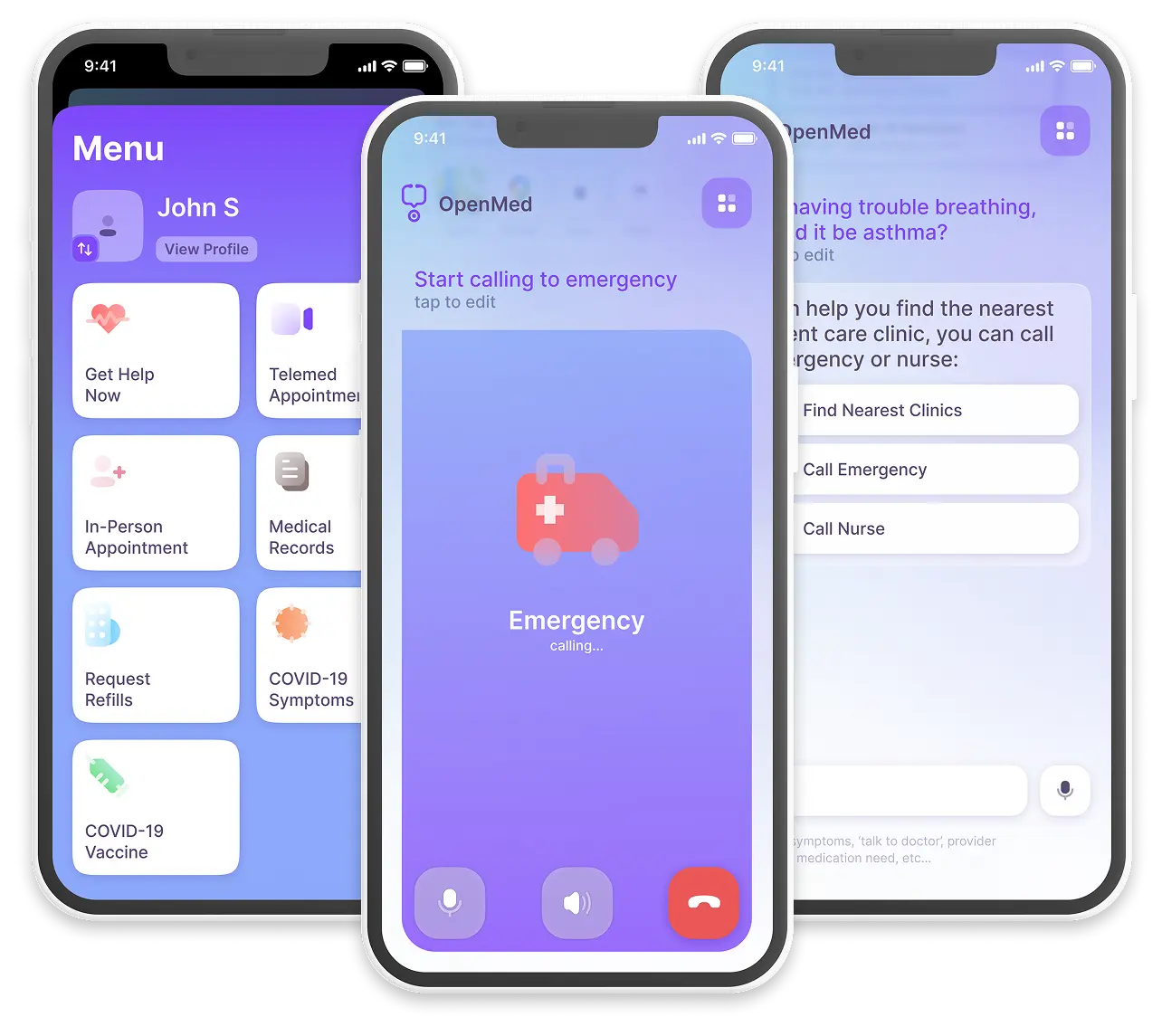
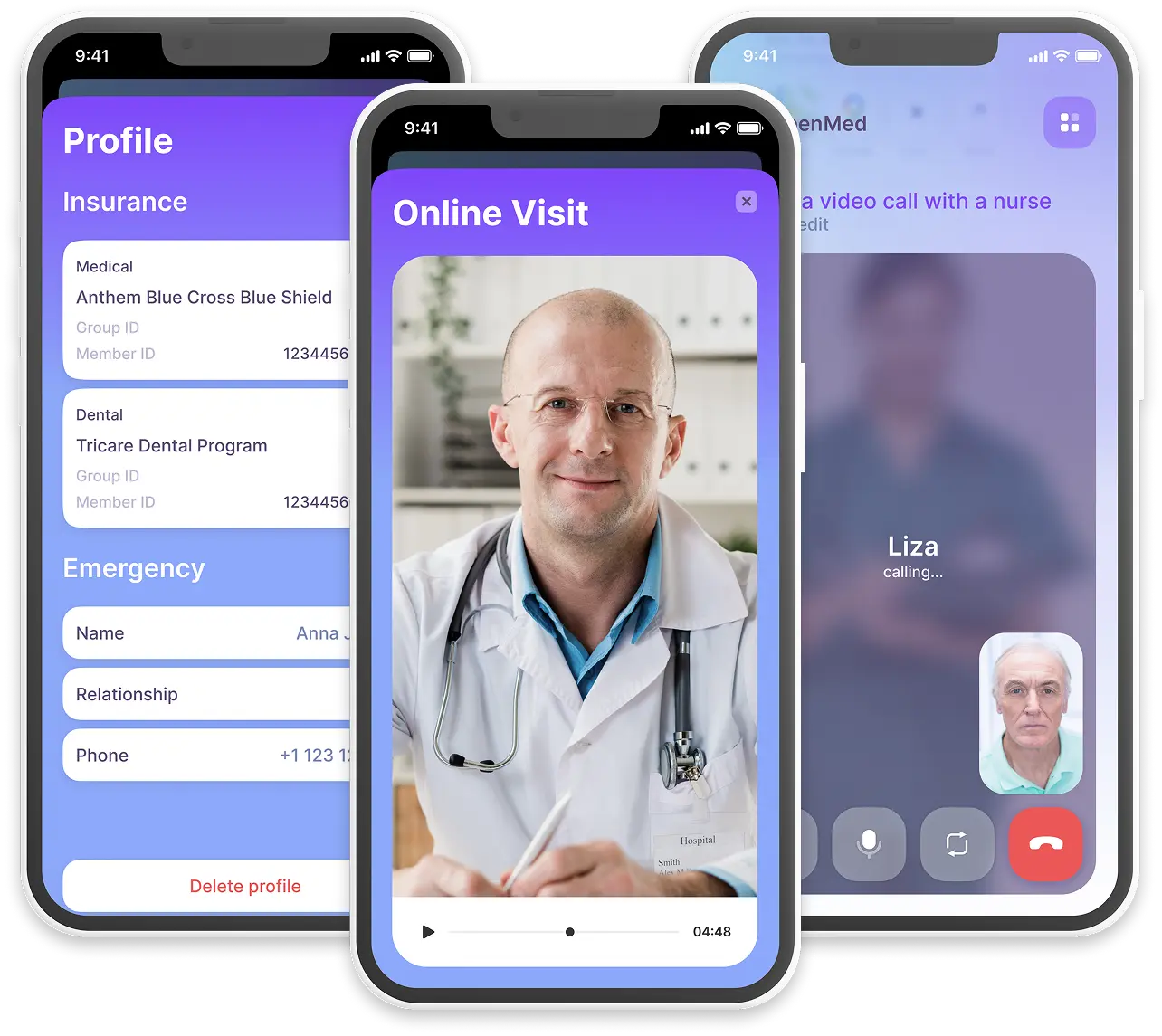
One of the key technical challenges on this project was integrating Agora for real-time video and audio communication between patients and healthcare providers.
Agora’s SDK required careful handling of permissions, audio/video state management, and call life cycle events within Flutter’s architecture. We implemented a clean integration using Bloc/Cubit for state management, ensuring that call controls – such as camera switching, mute, and speaker toggling – behaved reliably across both iOS and Android, where permission models differ significantly.
The result was a telemedicine experience that allowed patients to connect with their care providers directly from within the app, without leaving the platform.
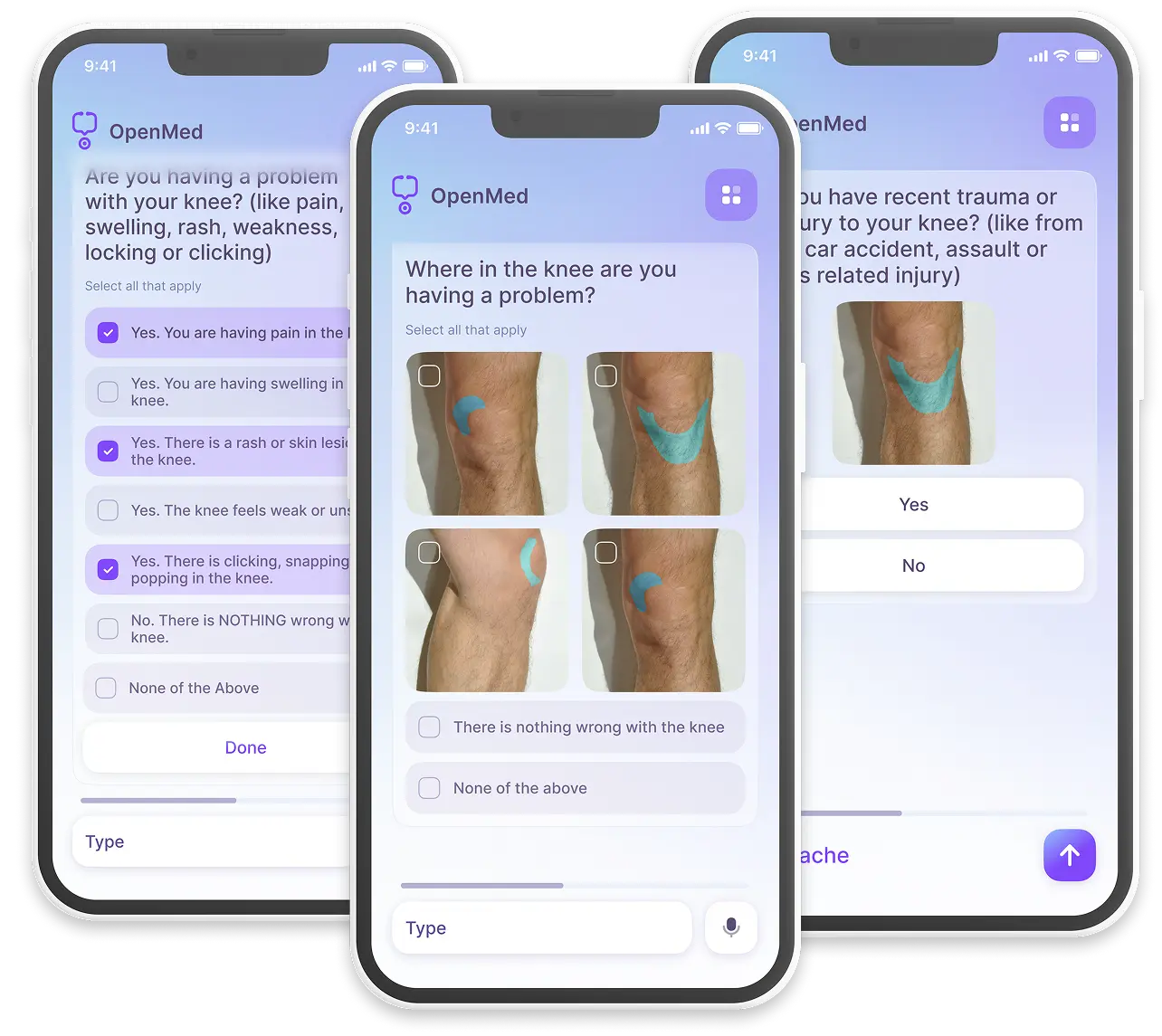
OpenMed replaces static intake forms with a live chat experience. Patients describe what they’re feeling in their own words, and the app responds with structured action cards – directing them to the nearest clinic, offering to call emergency services, or connecting them with a nurse. The checker guides patients through adaptive questions with yes/no, multiple choice, and image-based responses, making the intake flow feel less like a form and more like a conversation.
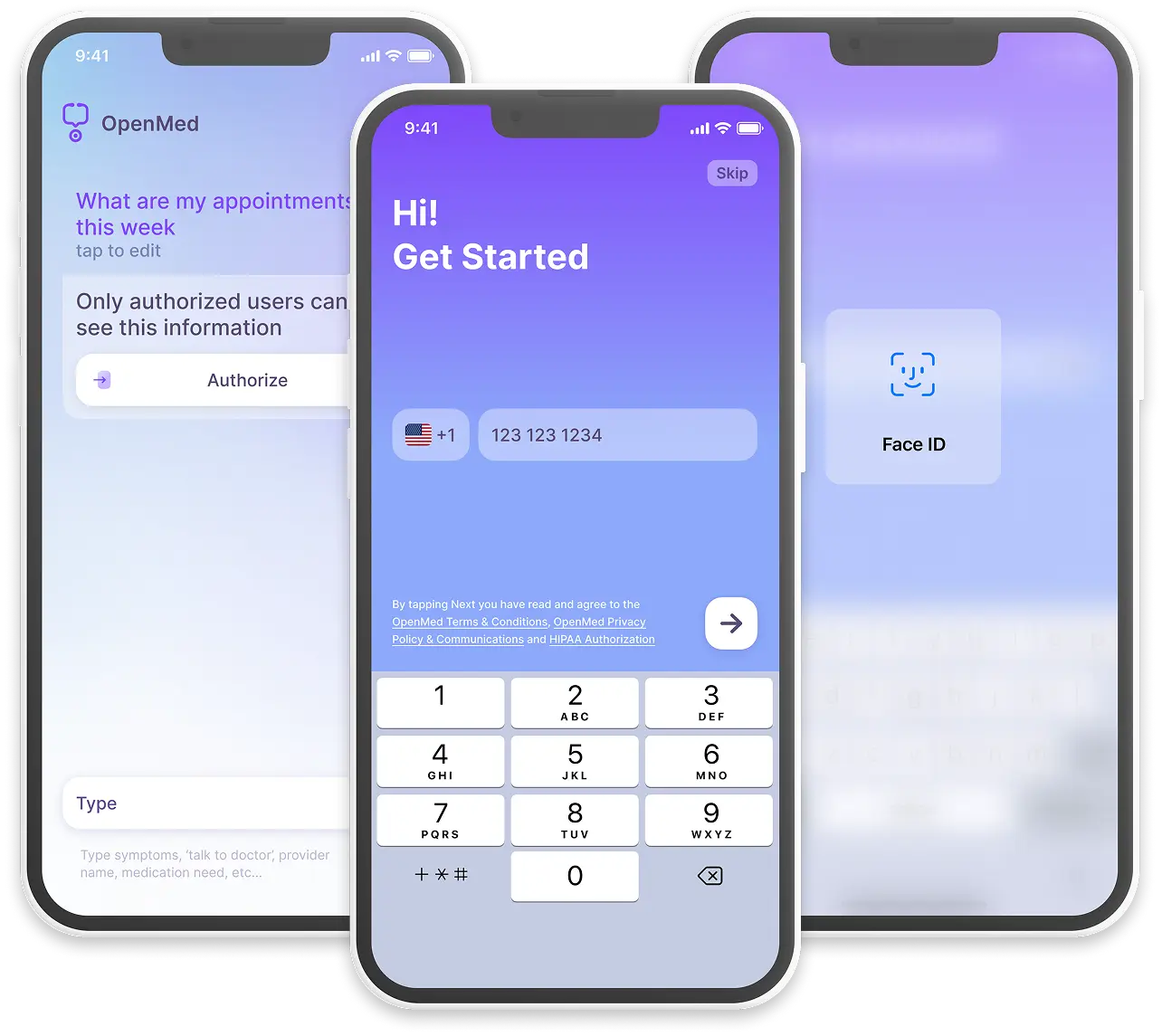
Getting started is straightforward: patients enter their phone number with automatic country detection, verify via SMS, and complete their profile in a few steps. Biometric login – Face ID and fingerprint – is set up during onboarding and used on every return visit, removing the friction of passwords while keeping access secure. Session restoration means patients land where they left off, with no repeated sign-in prompts.
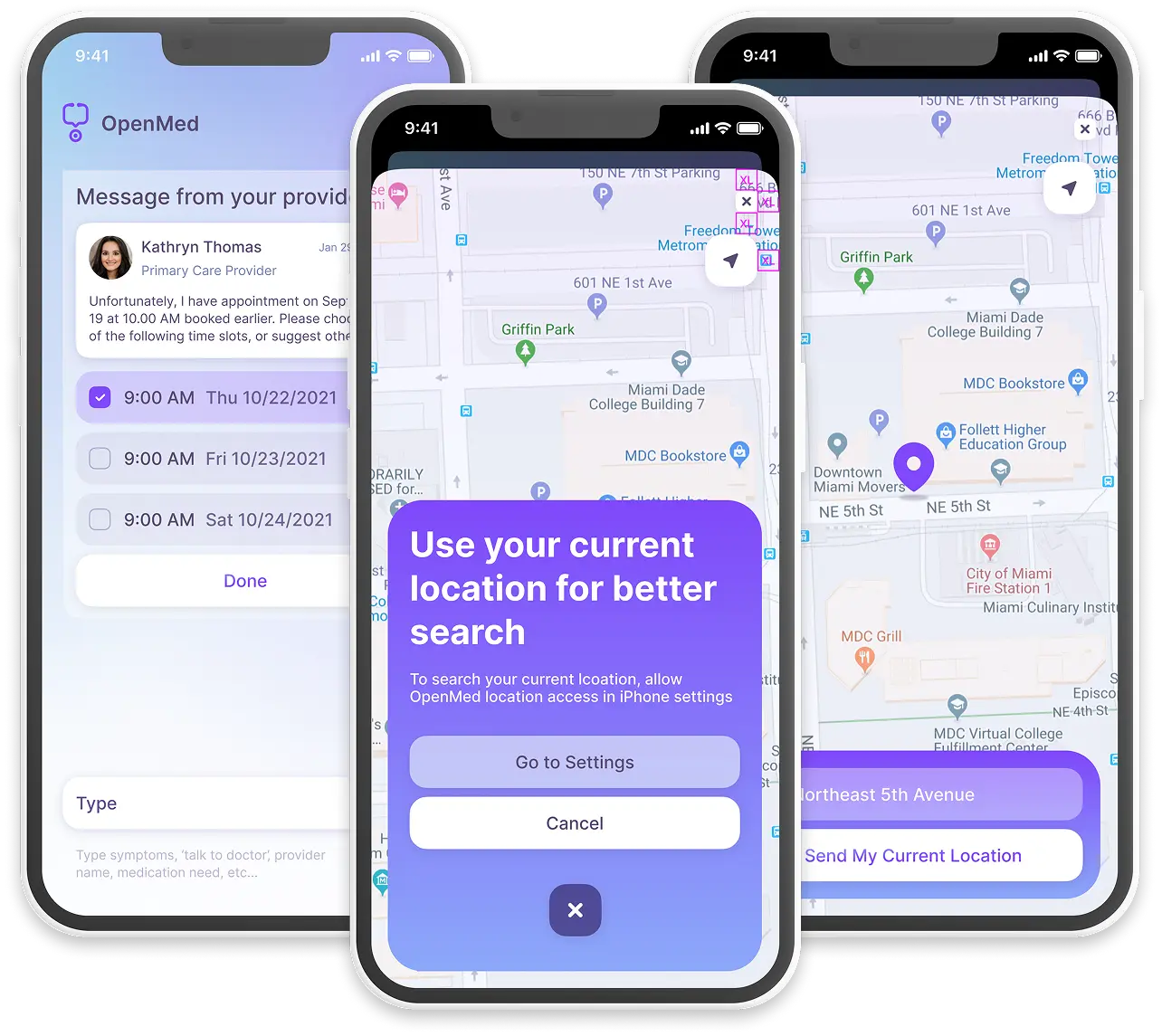
Patients can book and manage both virtual and in-person appointments from one place. The appointments screen surfaces upcoming visits with provider and clinic cards, giving patients the context they need at a glance. Date and time selection is handled inline, so scheduling a follow-up or switching appointment types takes seconds rather than a phone call.
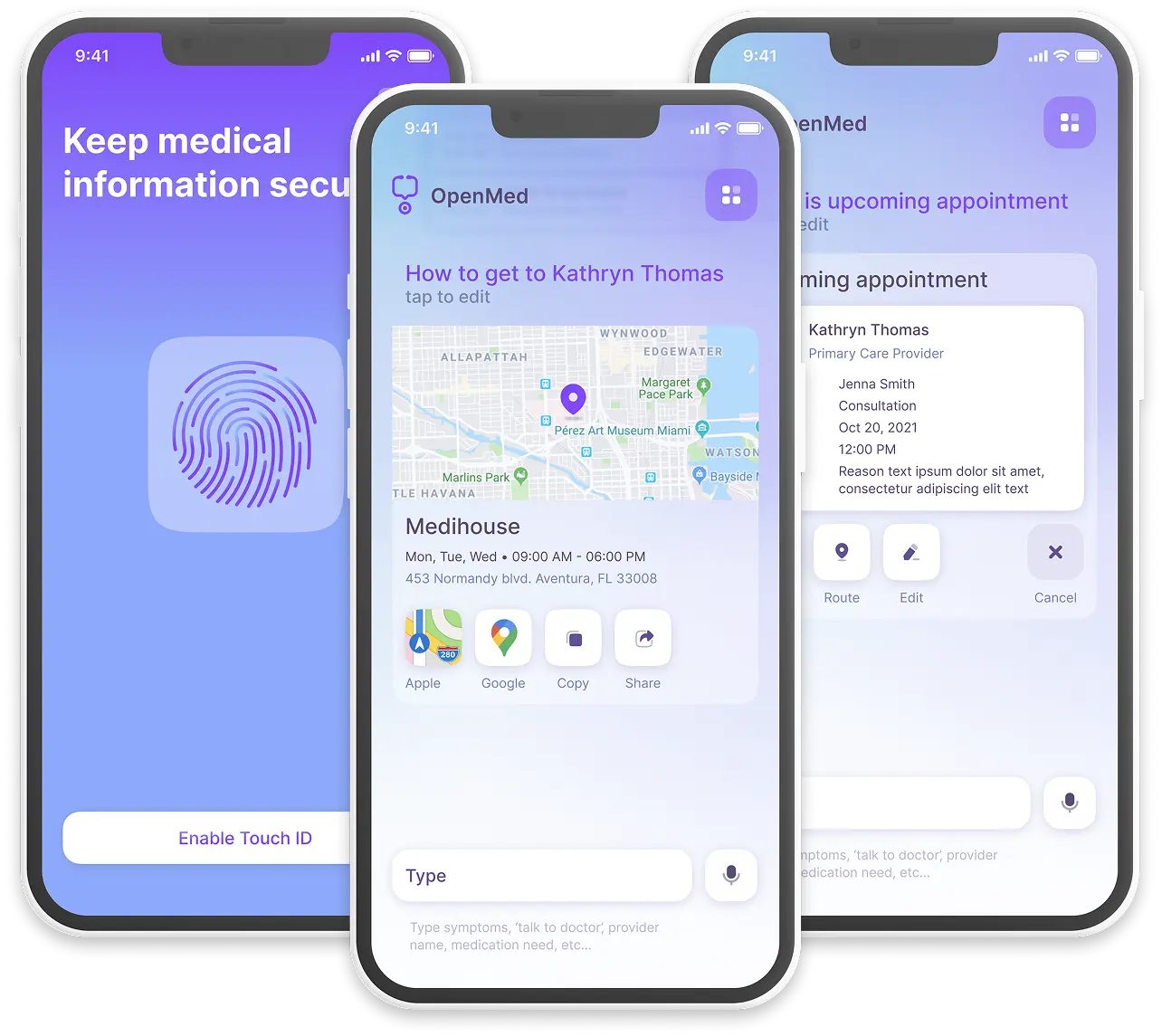
When a patient needs a care fast, the app uses their current location – or a searched address – to surface nearby providers and clinics on an interactive map. Each result card offers direct action: get directions, share the location, or call the clinic without leaving the app. It’s designed for the moment when finding care quickly matters most.
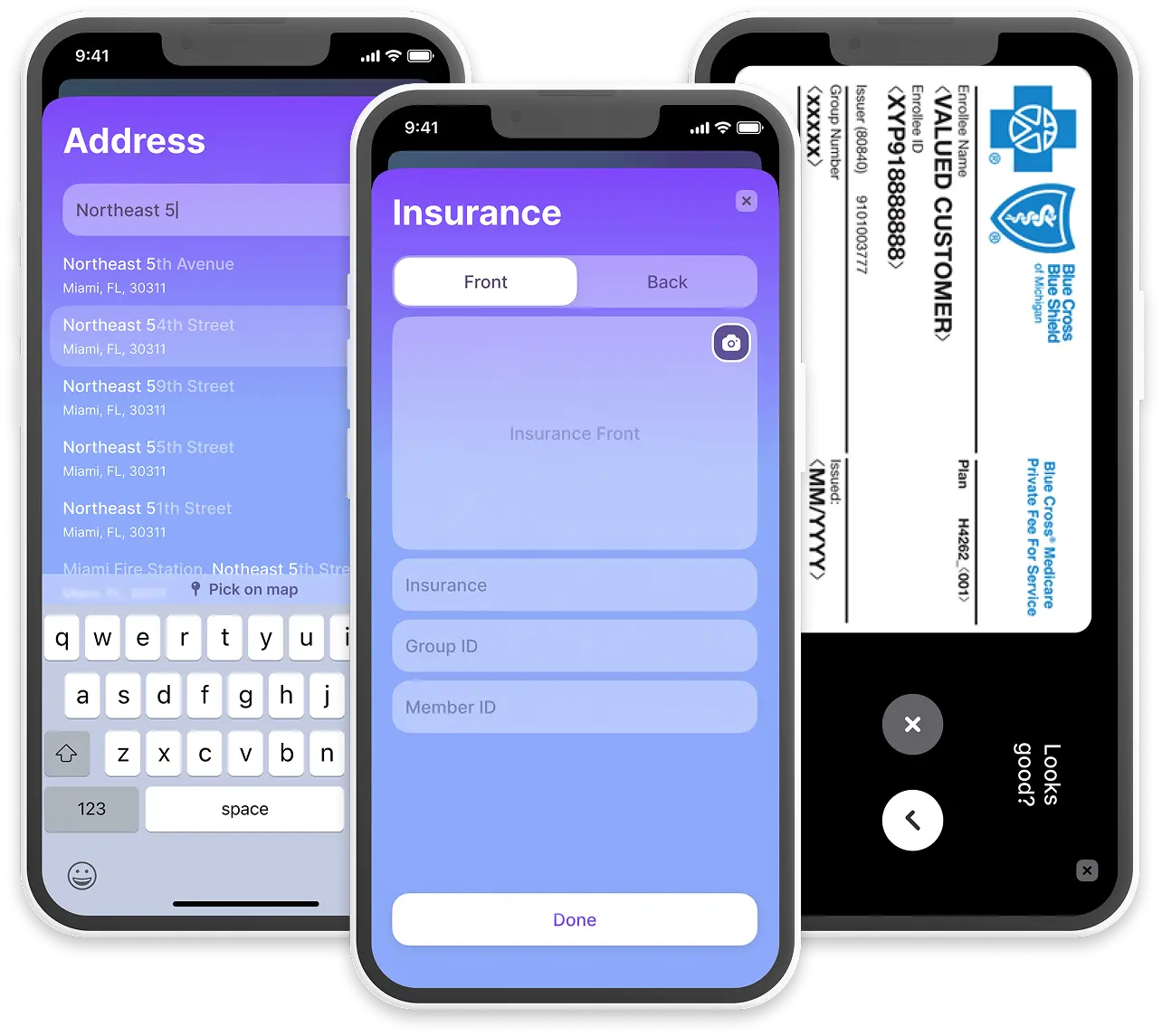
OpenMed handles both medical and dental coverage in a single flow. Patients search for their provider, enter member and group IDs, and capture their insurance card front and back using the device camera or photo library. The card is displayed in a flippable format that mirrors the physical card – clean, familiar, and always editable if details change.
The telemedicine module connects patients with their care providers through a dedicated in-app video call interface powered by Agora SDK. Call controls – camera switching, mute, and speaker toggle – work reliably across iOS and Android, handling the permission differences between platforms cleanly. Patients never need to leave the app to start a virtual consultation.
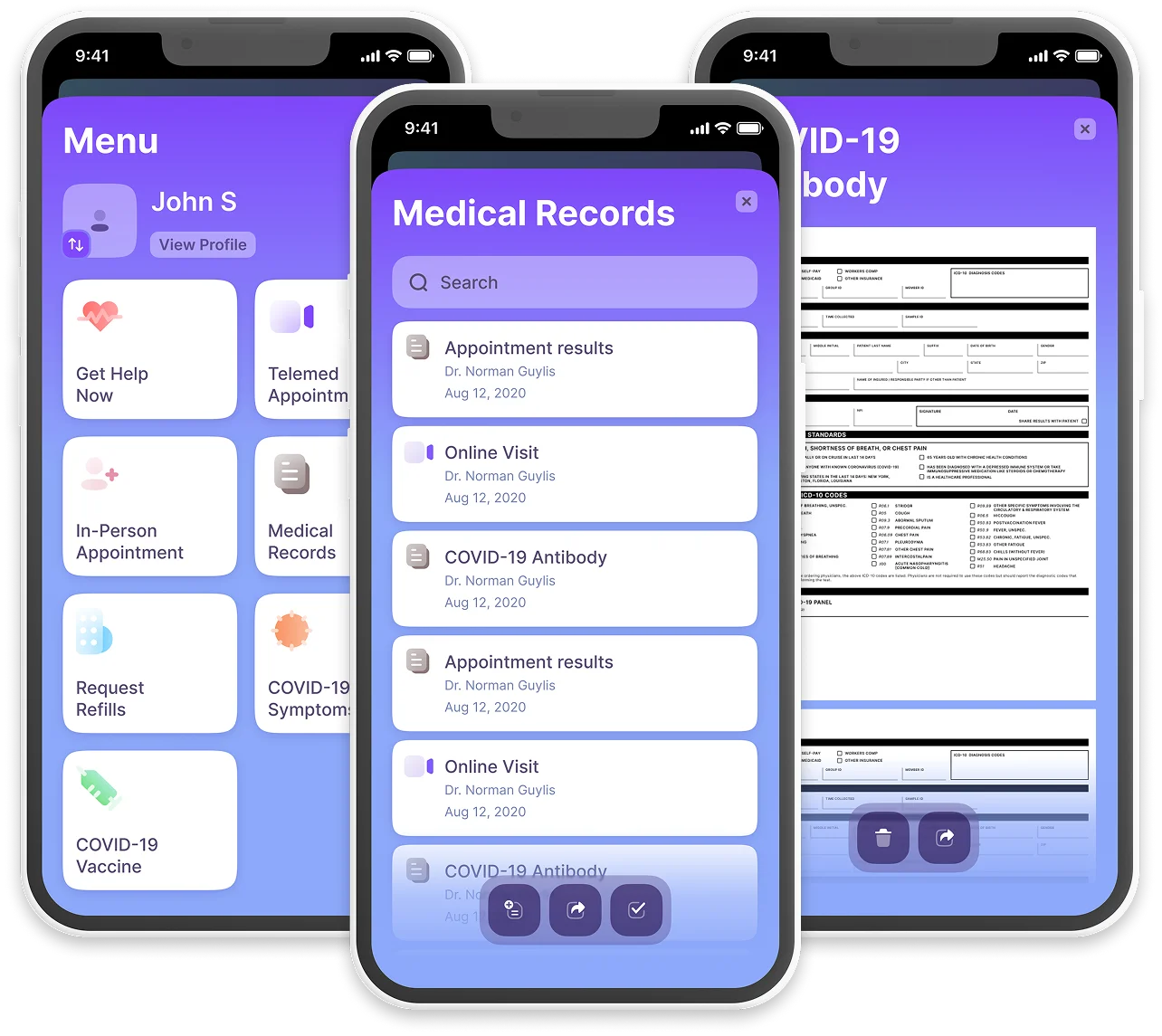
Beyond immediate care, OpenMed was built with a broader service layer in mind. From the home screen, patients can initiate a telemedicine video call, request prescription refills, access medical records, get urgent care guidance, or complete COVID-19 symptom checks and vaccine flows – all without switching apps or navigating away from their care context.
The mobile application was developed with Flutter, using Bloc/Cubit, AutoRoute, GetIt, and Agora SDK. Additional integrations include Google Maps, biometric authentication, secure storage, and camera-based insurance card capture.
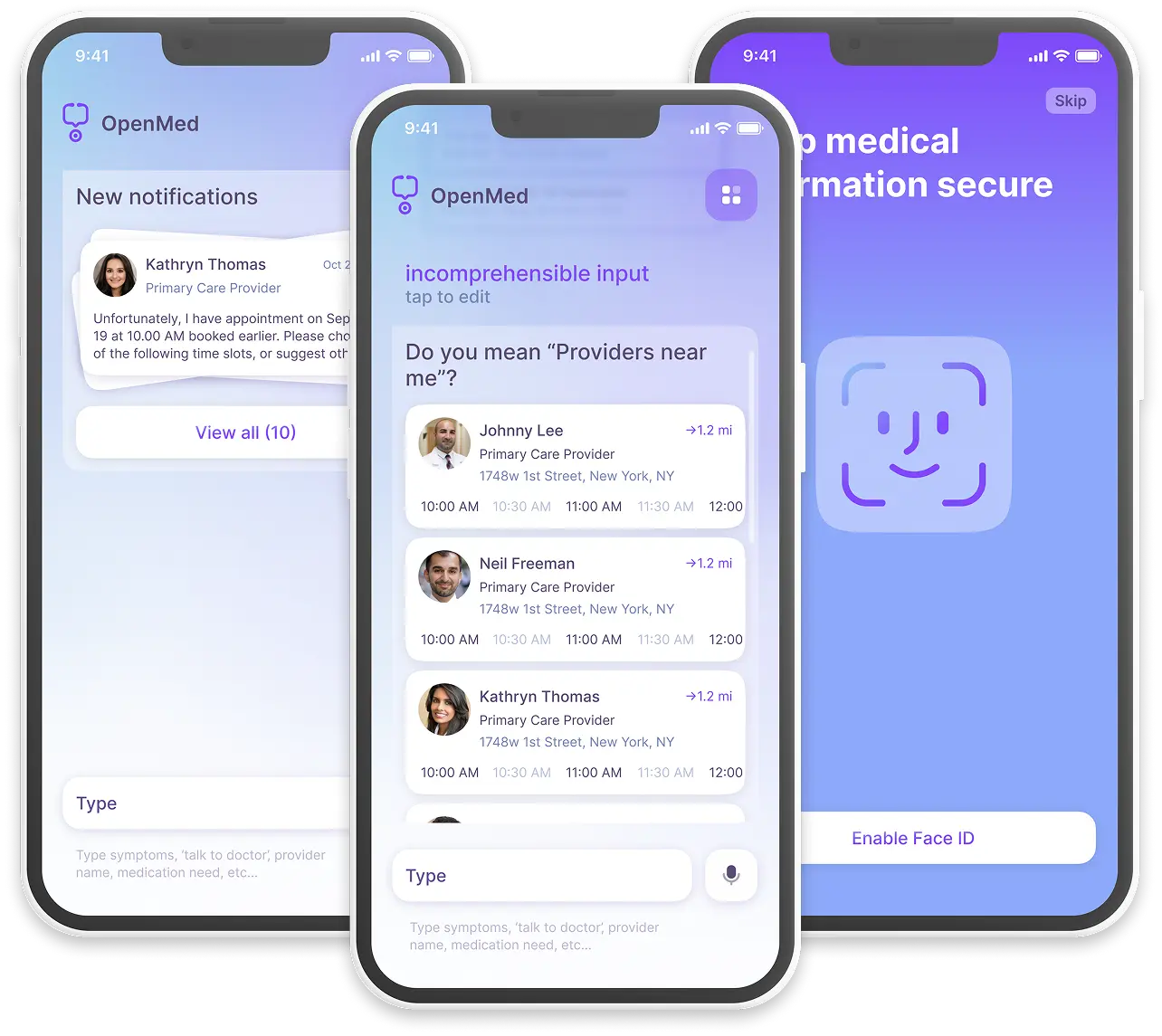
TBR Group delivered a high-fidelity patient healthcare assistant covering the full scope of the pilot: symptom intake, appointment management, telemedicine, insurance management, and care navigation – all unified through a single conversational interface. The application was built for iOS and Android and prepared for a US market pilot launch.